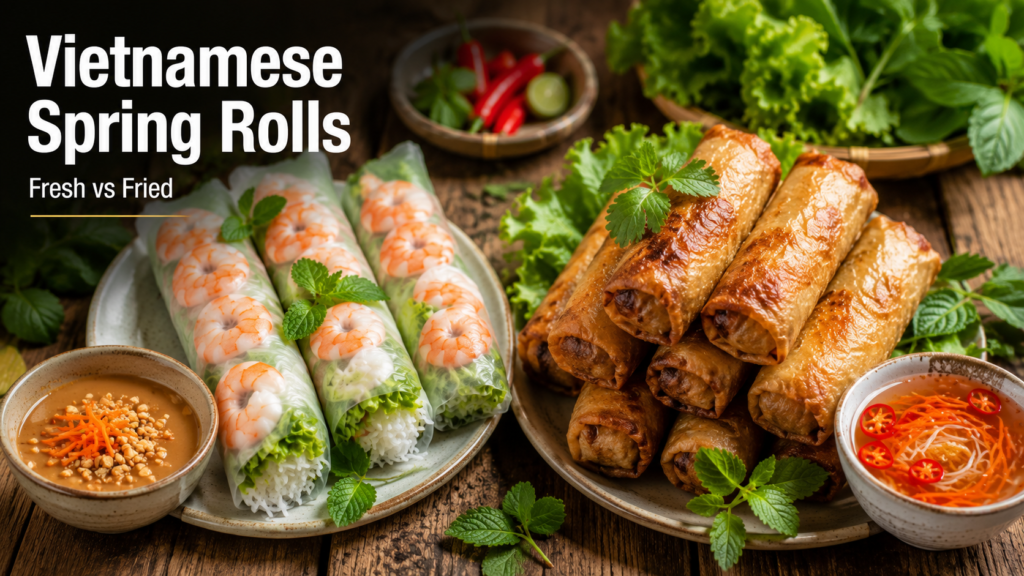
Vietnamese spring rolls come in two main types: gỏi cuốn — fresh “summer rolls” wrapped in soft rice paper with shrimp, pork, rice vermicelli, and herbs, served cold — and chả giò — crispy deep-fried rolls filled with pork and vegetables. Both are served with a dipping sauce, usually peanut sauce or nước chấm.
Vietnamese spring rolls at a glance
- Two types: Fresh (gỏi cuốn) and fried (chả giò)
- Also called: Summer rolls, fresh spring rolls, salad rolls (fresh); Vietnamese egg rolls (fried)
- Wrapper: Rice paper (bánh tráng) for both
- Fresh filling: Shrimp, pork, vermicelli, lettuce, herbs
- Fried filling: Ground pork, shrimp, mushroom, glass noodles, carrot
- Dipping sauce: Peanut sauce (fresh) or nước chấm (fried)
What are Vietnamese spring rolls?
“Vietnamese spring rolls” actually describes two very different dishes that share a rice-paper wrapper. One is fresh and cool, the other hot and crispy — and knowing which is which is the key to ordering exactly what you want.
The fresh version, gỏi cuốn, is uncooked: soft rice paper wrapped around shrimp, pork, herbs, and noodles, eaten at room temperature. The fried version, chả giò, is a savory filling rolled in rice paper and deep-fried until golden and shatteringly crisp. Both are staples of Vietnamese tables and menus across the United States.
Gỏi cuốn (fresh “summer rolls”)
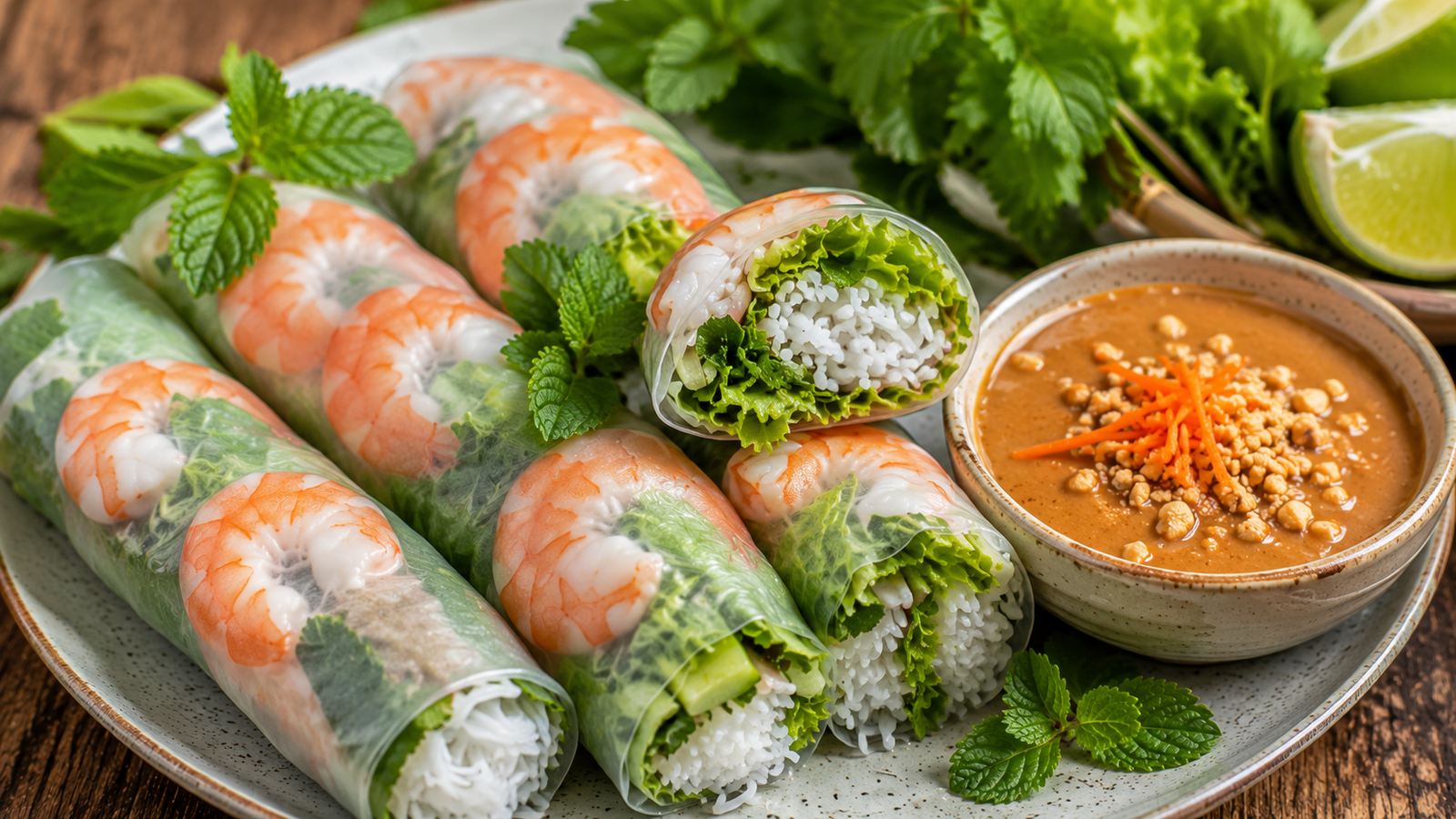
Gỏi cuốn are the translucent rolls you’ve probably seen with pink shrimp peeking through the wrapper. They’re filled with rice vermicelli, lettuce or leafy greens, fresh herbs like mint and cilantro, and usually shrimp and thinly sliced pork. Nothing is cooked after wrapping — they’re served fresh and cool, which makes them light and refreshing.
They’re typically dipped in a creamy peanut sauce (sometimes a hoisin-peanut blend). In English you’ll see them called summer rolls, fresh spring rolls, salad rolls, or rice paper rolls — all the same thing.
Chả giò (fried spring rolls)
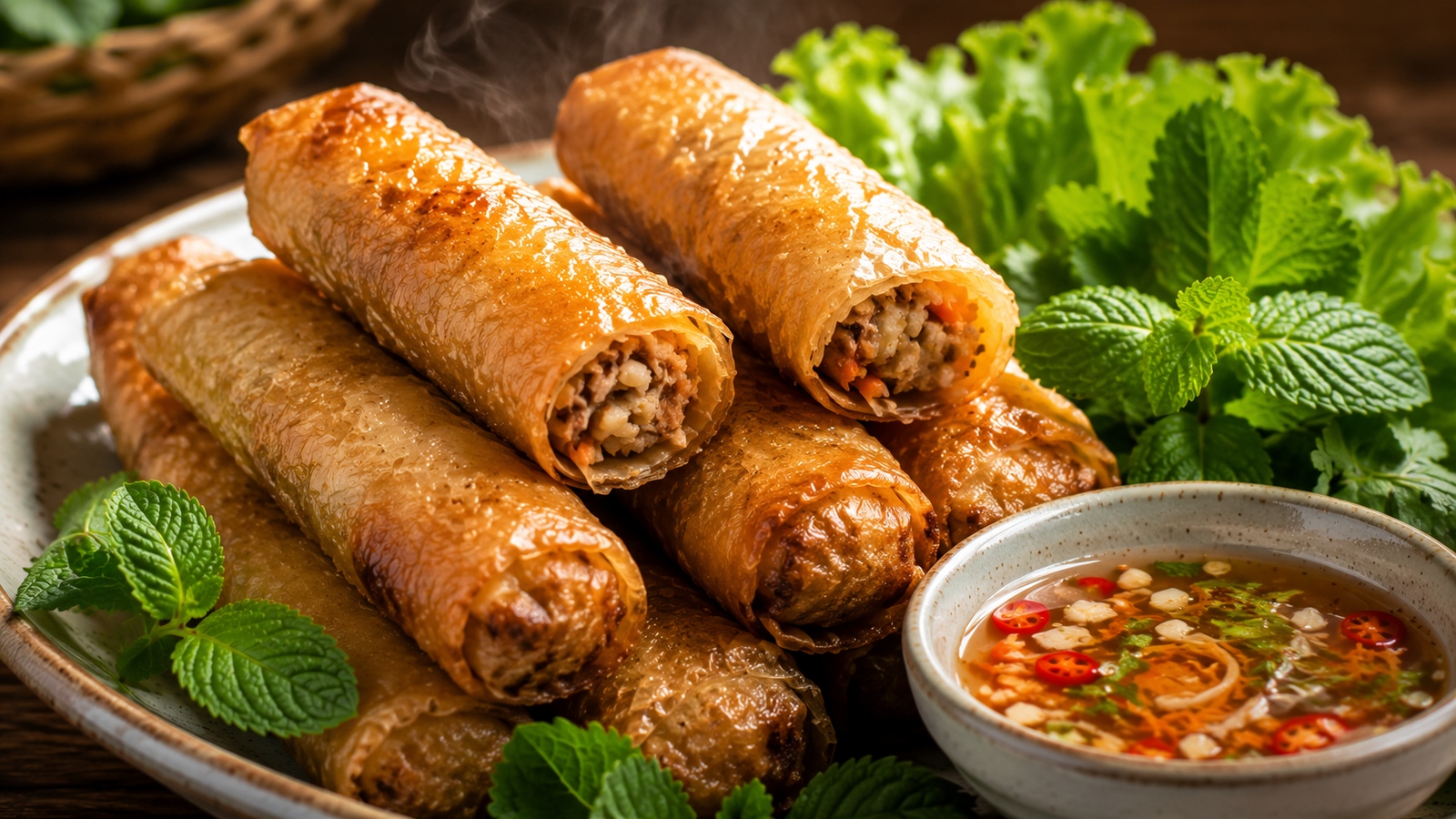
Chả giò are the crispy, golden rolls — known in northern Vietnam as nem rán. The filling usually combines ground pork, shrimp, wood-ear mushroom, glass noodles, and shredded carrot or taro, all rolled in rice paper and deep-fried. The result is crunchy outside, savory and juicy inside.
They’re served with nước chấm, the classic Vietnamese fish-sauce dip, and often wrapped in lettuce with herbs before eating. On US menus they’re frequently labeled “Vietnamese egg rolls,” though they’re lighter and crispier than Chinese-American egg rolls.
How do you pronounce them?
Gỏi cuốn is pronounced roughly “goy KOO-uhn,” and chả giò is roughly “cha YAW” (southern) or “cha ZAW” (northern). Gỏi means salad and cuốn means to roll, so gỏi cuốn literally means “salad rolls.”
Summer rolls vs spring rolls
This is the most common point of confusion. “Summer rolls” always means the fresh, cold rolls, while “spring rolls” is ambiguous — in many restaurants it means the fried, crispy kind.
| Summer rolls (gỏi cuốn) | Spring rolls (often fried) | |
|---|---|---|
| Cooking | Fresh, not cooked | Usually deep-fried |
| Temperature | Cold / room temp | Hot |
| Texture | Soft, light | Crunchy, crispy |
| Dipping sauce | Peanut sauce | Nước chấm |
For the full breakdown, see summer rolls vs spring rolls.
Spring roll vs egg roll
They look similar but come from different traditions, and the wrapper is the biggest giveaway.
| Spring roll | Egg roll | |
|---|---|---|
| Origin | Various Asian cuisines, incl. Vietnamese | Chinese-American |
| Wrapper | Thin rice paper or thin wheat — smooth | Thick wheat dough — bubbly, blistered |
| Texture | Light; fresh or lightly crispy | Heavy, chewy-crunchy |
| Typical filling | Pork, shrimp, vermicelli, herbs | Cabbage and pork |
See the full comparison in spring roll vs egg roll.
Gỏi cuốn vs chả giò
| Gỏi cuốn (fresh) | Chả giò (fried) | |
|---|---|---|
| Cooking | Fresh, uncooked | Deep-fried |
| Wrapper | Soft rice paper | Rice paper, fried crispy |
| Served | Cold | Hot |
| Sauce | Peanut sauce | Nước chấm |
More detail in gỏi cuốn vs chả giò.
The dipping sauces
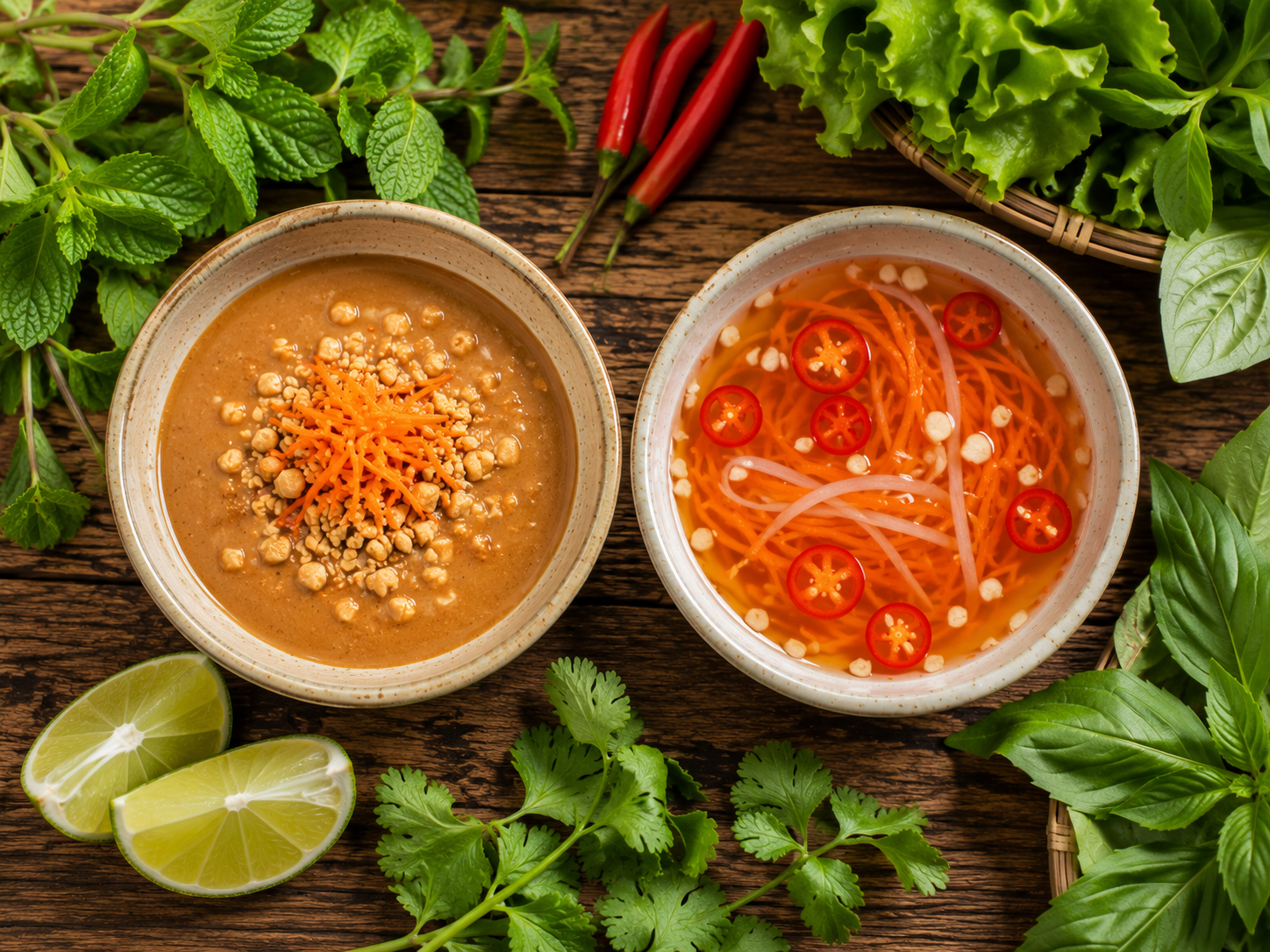
Sauce is half the experience. Fresh gỏi cuốn pair with a thick, savory-sweet peanut sauce, while fried chả giò are dipped in nước chấm — a bright blend of fish sauce, lime, sugar, garlic, and chili. Learn to make both in our guide to Vietnamese dipping sauces.
Are Vietnamese spring rolls healthy?
Fresh gỏi cuốn are one of the lighter options in Vietnamese cuisine — low in fat, full of herbs and vegetables, and often under 100 calories per roll (before sauce). Fried chả giò are richer because they’re deep-fried. For the full nutrition comparison, read are spring rolls healthy?
Craving Vietnamese spring rolls? 🥢
Find authentic Vietnamese restaurants serving gỏi cuốn and chả giò near you, across all 50 US states.
Find Vietnamese Food Near Me →Frequently asked questions about Vietnamese spring rolls
What are Vietnamese spring rolls?
Vietnamese spring rolls come in two types: gỏi cuốn, fresh rolls wrapped in soft rice paper with shrimp, pork, vermicelli, and herbs; and chả giò, savory rolls that are deep-fried until crispy. Both use a rice-paper wrapper and are served with a dipping sauce.
What is the difference between summer rolls and spring rolls?
Summer rolls (gỏi cuốn) are fresh and served cold, never fried. “Spring rolls” often refers to the fried, crispy version. The simplest rule: summer rolls are soft and cool, spring rolls are usually hot and crunchy.
Are spring rolls and egg rolls the same?
No. Spring rolls use a thin rice-paper or wheat wrapper and are lighter, and can be fresh or fried. Egg rolls are Chinese-American, with a thick, bubbly wheat wrapper and a heavier, chewier texture.
How do you pronounce goi cuon?
Gỏi cuốn is pronounced roughly “goy KOO-uhn.” It literally means “salad rolls” in Vietnamese — gỏi (salad) and cuốn (to roll).
Are Vietnamese spring rolls healthy?
Fresh gỏi cuốn are light and nutritious, packed with herbs and vegetables and often under 100 calories per roll before sauce. Fried chả giò are higher in fat because they are deep-fried.
What sauce goes with Vietnamese spring rolls?
Fresh gỏi cuốn are usually served with a creamy peanut sauce, while fried chả giò are dipped in nước chấm, a tangy fish-sauce-based dip with lime, sugar, garlic, and chili.
Exploring Vietnamese cuisine? Browse our full Vietnamese food guide, or read about pho and banh mi.